How Can Automation Reduce Human Error in P2P?


Peer-to-peer (P2P) lending platforms operate in an environment that demands speed, accuracy, and consistency. Every day, operational teams handle large volumes of data—from borrower documents and transaction information to verification and monitoring processes. In this context, human error is not an individual issue but a process risk inherent in manual systems and repetitive work.
In Indonesia's strictly regulated P2P industry, operational errors can impact risk assessment quality, internal compliance, and stakeholder trust.
Therefore, automation is seen as a crucial approach to reducing the probability of errors, not to replace human judgment. But how exactly does automation play a role in the P2P industry?
Where Does Human Error Commonly Occur in P2P Operations?

In daily practice, human error in P2P often arises at the following points:
- Manual data entry from borrower documents, such as financial reports, bank statements, or other supporting documents.
- Inconsistent verification processes, especially when application volumes increase.
- Incorrect transaction classification, due to differing manual interpretations among analysts.
- Delayed anomaly identification due to time constraints and workload.
These errors are typically unintentional but can affect the quality of credit analysis and overall decision-making. Ultimately, this can become an operational risk.
The Role of Automation in Reducing Error Risk
Automation in the P2P context focuses on standardizing processes and reducing reliance on repetitive manual work. Some of its main benefits include:
1. Process Consistency
Automated systems apply the same rules and parameters to every case, reducing result variations due to differences in human interpretation.
2. Reduced Input Errors
With automated data extraction and processing, the risk of typographical errors or human error can be significantly minimized.
3. Early Anomaly Detection
Automation allows systems to flag patterns deviating from normal parameters, enabling analysts to perform anomaly detection earlier.
4. Improved Audit Trail
Automated processes produce neater logs and records; documented transaction and activity data supports internal analysis and traceability needs.
Limitations of Automation to Understand

To maintain credibility, it's important to understand that automation does not eliminate risk entirely. Some of its limitations include the process's heavy dependence on the input data.
Furthermore, for complex or uncommon cases, professional judgment from experts remains necessary. While automation simplifies fixed and repetitive tasks, governance, internal policies, and human oversight remain essential elements that should not be removed.
Within this framework, automation functions as a decision-support tool, not the decision-maker itself.
The P2P Context in Indonesia
In the Indonesian P2P ecosystem, operational pressure often increases alongside transaction volume growth and compliance demands. An automation-based approach helps platforms build more disciplined, measurable, and replicable processes—aligned with the prudential principles expected by regulators and institutional partners.
Aligning Operational Needs with Technology
Current operational needs of P2P include the ability to:
- Extract data from various documents,
- Ensure consistency in verification processes,
- Flag potential anomalies earlier, and
- Maintain data traceability.
Such capabilities are available in technology-based solutions designed to support P2P operational processes. Simplifa.ai, for example, provides features that help standardize data processing and accelerate verification, allowing teams to focus on analysis and decision-making, not administrative work.
Automation plays a vital role in reducing human error in P2P, especially in processes that are repetitive and high-risk for inconsistency. With the right approach, automation helps improve accuracy, efficiency, and operational reliability without eliminating the crucial role of human oversight and judgment.
Contact us for more information:
Email: hello@simplifa.ai
Website: www.simplifa.ai
Related Articles
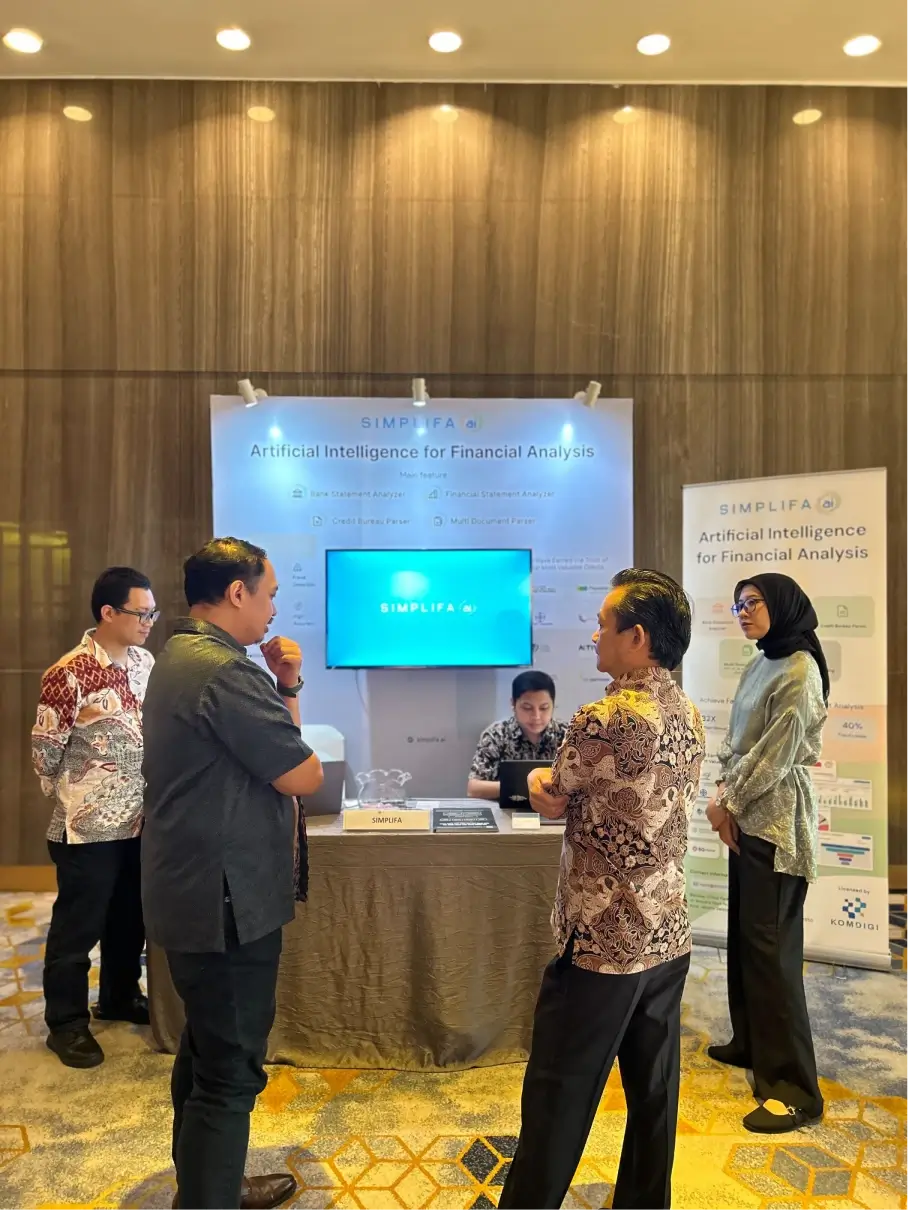
A National Seminar, “Resilience and Turnaround: Indonesia's Economic Direction”, hosted by The Indonesian Financing Companies Association (APPI) held at the Pullman Hotel Thamrin, Jakarta.

An effective anomaly detection solution using machine learning to accurately identify fraud and data deviations. Learn its benefits and applications across various sectors.

Learn how window dressing distorts decisions, weakens governance, and erodes business trust over time.