Best Practices for Implementing OCR in Financial Audits


In financial audits, the reliability of evidence forms the foundation of the auditor's opinion. ISA 500 on Audit Evidence emphasizes that auditors must obtain sufficient and appropriate evidence to support their audit conclusions.
When source documents are available in PDFs, scans, or unstructured formats, the use of OCR (Optical Character Recognition) often becomes a solution to convert documents into analyzable data.
However, implementing OCR in audits is not merely a matter of automation—it also concerns evidence integrity, internal controls, and data traceability. Without an appropriate control framework, extraction errors can potentially lead to undetected misstatements.
1. Positioning OCR as Part of the Audit Evidence Framework
OCR should be positioned as a layer of evidence processing, not as a replacement for audit procedures. Best practices include:
- Documenting the original source documents
- Storing the digital version of the extracted results
- Maintaining the linkage between source documents and OCR-generated datasets
Traceability is essential to ensure that every figure analyzed can be traced back to its original document. This principle aligns with audit standards that emphasize the reliability and verifiability of evidence.
2. Implementing Automated Validation and Reconciliation
OCR extracts text, but it does not guarantee contextual correctness or numerical consistency. Therefore, the next best practice is to establish a validation layer. Examples include:
- Matching extracted totals with totals from the source document
- Ensuring consistent date and number formats
- Identifying abnormal values (outlier detection)
- Generating an exception report
This approach reduces the risk of character errors that could impact further analysis.
3. Separating Data Extraction from Interpretation

One of the risks in using technology is automation bias—the tendency to accept system outputs without critical evaluation.
In the audit context, it is important to separate the data extraction process (OCR) from the analysis and professional judgment process of the auditor.
OCR helps accelerate document processing, but audit decisions still require professional judgment.
This approach supports the principle of professional skepticism, which is fundamental to audit practice.
4. Measuring and Monitoring Accuracy
To ensure that the use of OCR can be accounted for, institutions need to establish measurable performance indicators, such as:
- Character recognition accuracy rate
- Field-specific extraction accuracy rate (e.g., amounts, dates)
- Manual correction ratio
- Number of detected exceptions
Regular monitoring of these metrics helps ensure that the system remains reliable as document formats change or data volumes increase.
Internal control frameworks such as COSO emphasize the importance of ongoing monitoring and evaluation of control systems.
5. Governance, Access, and System Documentation
In an audit environment, the use of OCR also needs to be supported by adequate governance, such as:
- System configuration documentation
- User access controls
- System change management procedures
- Activity log storage
This ensures that the system can be audited and held accountable, especially when extraction results are used as a basis for further testing.
ISACA and various IT governance frameworks emphasize the importance of controls over information systems that process financial data.
6. Integrating OCR with Data-Driven Audit Procedures
Best practices do not stop at extraction. OCR results need to be integrated with analytical procedures such as:
- Transaction reconciliation
- Completeness testing
- Trend and anomaly analysis
- Identification of unusual patterns
With this approach, OCR becomes part of a data-driven audit architecture, not merely a document conversion tool.
From Automation to Evidence Reliability
The implementation of OCR in financial audits is not intended to replace audit procedures, but rather to improve the consistency, efficiency, and accuracy of evidence processing. Best practices require document traceability, systematic validation, separation of functions, accuracy monitoring, and documented governance. With such a framework, OCR can support a more structured and accountable audit process, while reducing the risk of errors arising from manual document processing.
Related Articles

Understand the role of non-business transactions in audit risk assessment and their impact on financial reporting integrity.
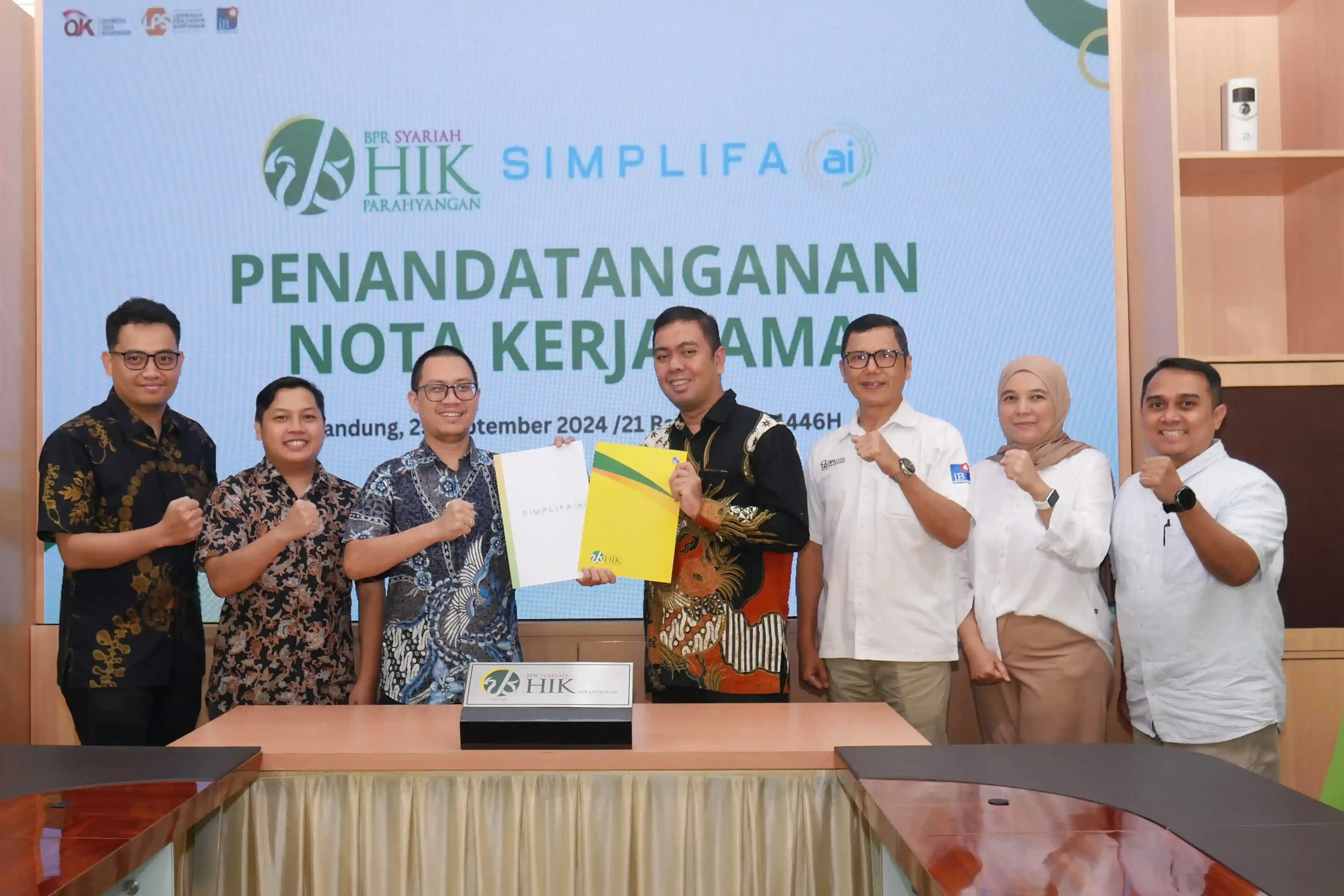
Simplifa.AI and BPRS HIK Parahyangan formally inked a strategic collaboration agreement in Bandung on September 25, 2024, which was a significant turning point in the adoption of AI technology in the Islamic banking industry

Learn key financial statement analysis methods from trend, common size, ratio, cash flow, and earnings quality to evaluate business performance accurately.